


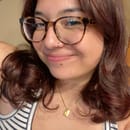
Personal identity has always been a tricky subject for me to talk about. Growing up in a predominantly white neighborhood, going to a predominately white school, and having predominantly white friends led to me to not give much thought to if I were different from the people around me. In fact, I didn’t think that speaking Spanish at home with my grandparents and eating traditional Nicaraguan dishes made me any different from anyone I knew at school. Looking back at my childhood, there were many instances of me trying to “be more American” that I can remember that honestly break my heart. Even though I didn’t realize it then, I was craving to be more like everyone else instead of embracing who I truly am and being proud of where I come from.
I was born and raised in Northern Virginia, and anyone who knows the area knows that there is a good amount of diversity, but the ratio of white people to POC is still not balanced. So, it’s no surprise that growing up, my closest friends up until high school were white. This wasn’t because I didn’t like people of color; I had tried to become friends with other Latinas in my classes but like most things, it takes one bad experience to turn you away. In elementary school, I had dealt with constant teasing from my “friends” about my interests, hobbies, and how I dressed, but none of it affected me as much as one comment from a close Latina friend. She bluntly told me I was “too white” to be Latina because of how I looked and what I liked and insisted I wasn’t really Latina because I didn’t know all the Hispanic dishes she was quizzing me on and it didn’t end there. I never stood up for myself so she took advantage and made other comments to the point that I was questioning my Latinidad at the ripe age of 12. From then on, I felt judged by her and other Latinas in my grade and I started to believe that I really wasn’t Latina enough to be hanging out with them. Even now, in my second year of college, those comments still linger with me.
Just as I was going through an identity crisis, along came puberty and everyone’s favorite, the comparison game. I started noticing how dark my leg, arm and mustache hair (yes, women have mustaches too) was compared to my blonde-haired friends and it honestly crushed my self-esteem because I was constantly trying to hide it or get rid of it because it made me different. Not only was I self-conscious about my looks, but I started to question more and more who I was as a person. On one hand, I would beg my parents to only talk to me in Spanish at home so I could practice speaking it and on the other I was at school pretending I was actually supposed to be named “Amy” and trying way too hard to prove that I really was part Irish despite what I looked like. Although I spoke Spanish, ate Nicaraguan dishes and my heritage is Hispanic, I started to question if I was Latina enough.
I found myself (and I know many other Latinas have dealt with the same) stuck in this in-between of being “too Latina” for some people and “not Latina enough” for others. I can’t count the amount of times I have had to convince people (mainly white) that my last name really is McCoy even though I don’t look 25% Irish or having substitutes look very confused after calling out for an “Andrea McCoy” and seeing my hand raised. At the same time, I felt that I didn’t fit in with other Latinos because I mainly spoke English, was born and raised in Virginia, and looked different. At times, people would look confused when I started speaking Spanish, shocked that I didn’t look like what they imagine a “typical Latina” to look like. Looking back, I wonder, why were they so concerned about my Latinidad?
Now in college, going to a predominantly white university, I find it to be an even harder struggle when I look around in my classes and see only two other POC, or even just walking around on-campus seeing only one or two students that look even remotely like me. I remember during freshman year orientation, we attended an event where a faculty member spoke to me and the other girls on my floor about diversity. I couldn’t help but chuckle because when I looked around, aside from my roommate, our Resident Advisor, and me, everyone else was white. I love my school — everyone is so friendly, especially my girls in the JMU Her Campus chapter — but forming deeper connections beyond just shared interests with people who come from different backgrounds can be challenging.
At the end of the day, when you strip away my appearance, what language I speak, or what my ethnicity is you’re left with my goals, dreams, hobbies and interests. Although I do strongly value my heritage and culture, I also believe that there’s more to me than just that. I believe there’s more to everyone than just where they come from and what they look like. I won’t lie, at times, I still struggle with questioning if I am “Latina enough,” but I remind myself that being Latina doesn’t just have one “look”. There are Latinas with fair skin, dark skin, curly hair, straight hair, brown eyes, or even blue eyes. Not all of us speak Spanish, but that shouldn’t discredit if we make the cut to be a “true Latina.” If there are any Latinas out there reading this and struggling with the same thoughts and insecurities as me, let me be the first and hopefully not the last to say, YOU ARE LATINA ENOUGH.